Corsica does not merely offer sublime landscapes. It feeds those who visit with a rare generosity, a sincerity of flavour found nowhere else in the Mediterranean. Corsican gastronomy is the exact reflection of its island: wild, authentic, forged by centuries of pastoral tradition and by the richness of a unique terroir where mountains plunge into the sea.
Around Porto-Vecchio, this cuisine takes on a particular dimension. The producers are close at hand, the markets vibrant, the restaurants deeply attached to their roots. From Villa Azaitu, every meal can become a discovery. In the morning, fresh cheese on the terrace. At noon, a plate of charcuterie in the shade of the pines. In the evening, a glass of Figari wine accompanying the sunset over the Cerbicales Islands. Here is a guide to the flavours that form the soul of this island.
A cuisine of terroir and character
Corsican cuisine was not born in recipe books. It was born in shepherds' huts, in chestnut groves, in kitchen gardens beside granite houses. It is a cuisine of necessity turned cuisine of passion, where every product tells the story of the place that saw it born. The pigs that roam freely through cork oak forests, the ewes that graze on the fragrant herbs of the maquis, the bees that feed on cistus and strawberry tree: everything contributes to a gastronomic ecosystem of rare coherence.
What strikes the attentive visitor is the purity of flavours. Here, nothing is masked, nothing is contrived. The charcuterie carries the scent of the woodland where the pigs grew. The cheese has the savour of the herbs the ewes have grazed. The honey carries within it the very essence of the maquis. This honesty of product, this fidelity to terroir, is what distinguishes Corsican gastronomy from so many other Mediterranean culinary traditions.
Corsica also benefits from a dual heritage. That of the mountain, with its dried meats, thick soups and powerful cheeses. That of the coast, with its grilled fish, sea urchins and shellfish. Porto-Vecchio, situated at the exact junction of these two worlds, offers the best of both.
Charcuterie: lonzu, coppa, prisuttu, figatellu
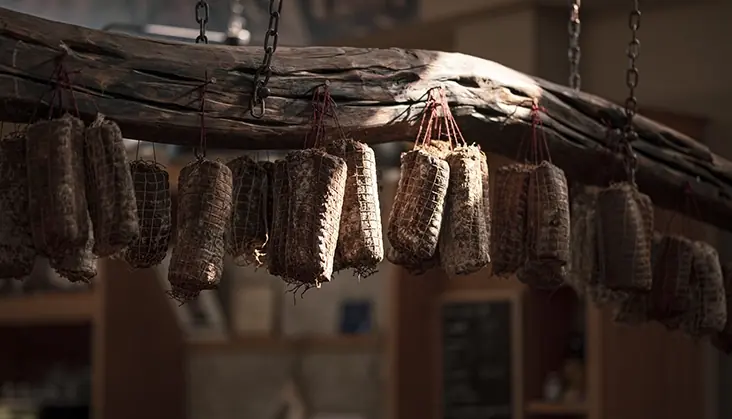
Corsican charcuterie is an art form in its own right. It begins with the porc nustrale, an endemic breed that lives in semi-liberty in the maquis and chestnut groves, feeding on acorns, chestnuts and wild roots. This natural diet gives the meat a depth of flavour that no industrial farming can match.
The lonzu, cut from the fillet, is dried slowly over several months in mountain drying rooms where air circulates freely. On the palate, it offers a melting texture and a delicate, slightly peppery taste that evokes autumn woodland. The coppa, cut from the neck, is more marbled, more generous, with hazelnut notes that build through the tasting.
The prisuttu, Corsican cousin of Italian prosciutto, demands patience of several years. The finest prisuttus age for eighteen months, sometimes two years, in natural cellars where humidity and temperature remain constant. The result is meat of remarkable intensity, at once gentle and complex, enjoyed in thin slices on country bread.
The figatellu is the star of the Corsican winter. This pork liver sausage, smoked over chestnut wood, is enjoyed grilled over embers or dried. Its powerful, almost primal taste divides palates but wins unanimous praise from enthusiasts. At the Porto-Vecchio markets, ask to taste before buying: the producers are proud of their craft and love to share it.
Cheeses: brocciu, ewe's milk tomme
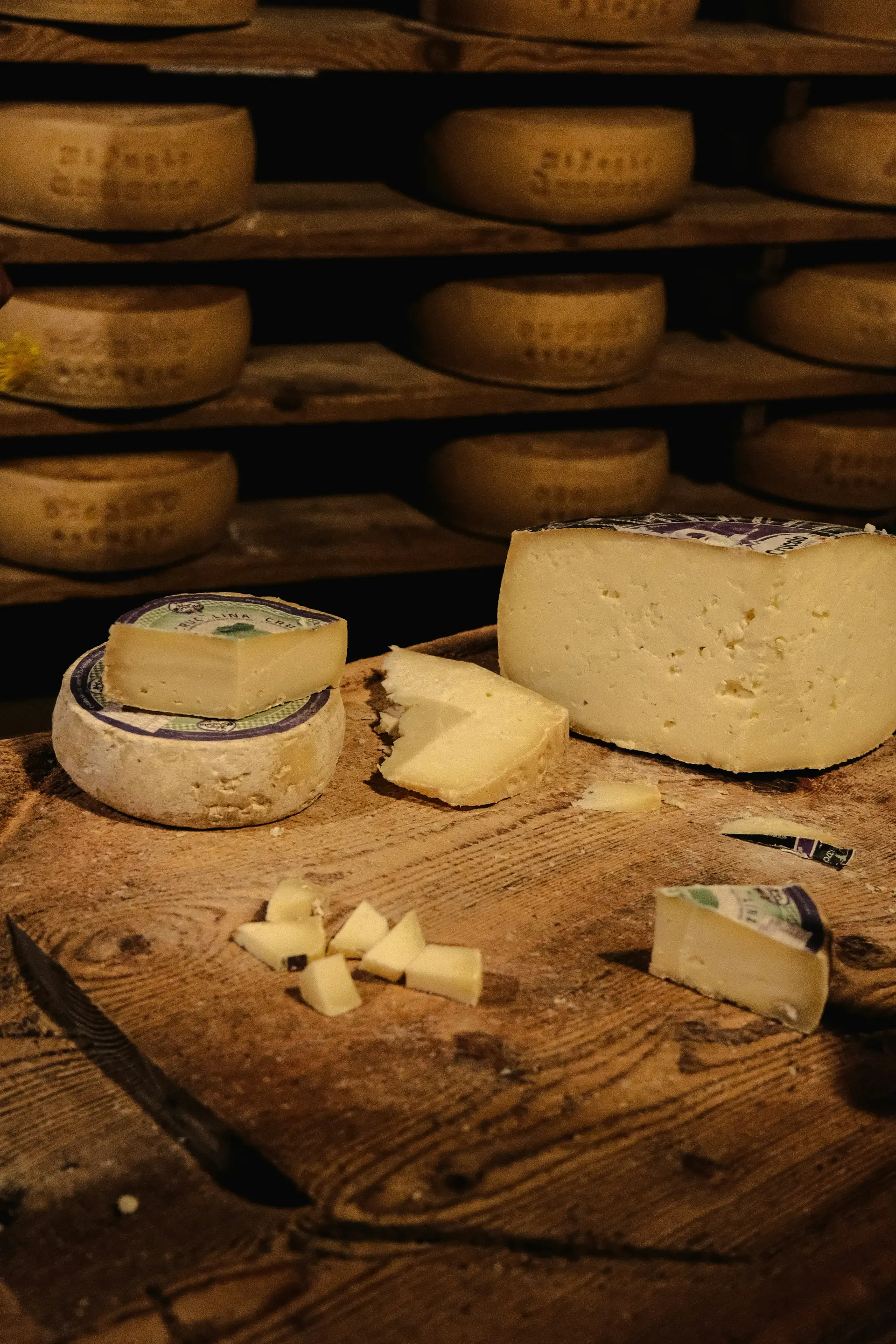
If charcuterie is the pillar of Corsican gastronomy, cheese is its beating heart. Brocciu, a fresh whey cheese made from ewe's or goat's milk, is so emblematic that it holds a controlled designation of origin. Its creamy, almost airy texture and its gentle, slightly tangy taste make it an ingredient as versatile as it is delicious.
It is enjoyed plain, drizzled with a dash of eau-de-vie, or worked into traditional recipes. Cannelloni with brocciu and spinach is an absolute classic of Corsican cuisine. The fiadone, a light brocciu cake scented with lemon, closes meals with a welcome freshness after the generous plates that precede it.
Corsican ewe's milk tomme comes in an infinity of nuances depending on its ageing. Young, it is mild and supple, with notes of fresh milk and hazelnut. Aged, it becomes firmer, more powerful, with a pronounced character not unlike certain Sardinian pecorinos. The shepherds of Alta Rocca and the Coscione plateau produce exceptional tommes found at the Porto-Vecchio markets, sometimes still warm from the journey.
Maquis honey and preserves
Corsican honey bears a name that says everything: mele di Corsica. It too holds its own designation of origin, so recognised is its singularity. The maquis, that dense and fragrant vegetation covering the island's hills, offers bees a floral palette of exceptional richness. Strawberry tree, heather, cistus, rosemary, wild lavender, chestnut: each season brings its flowers and aromas.
Spring maquis honey is pale, floral, delicate. Summer honey is more amber, more intense, with herbaceous notes. Chestnut grove honey, dark and powerful, pairs perfectly with aged cheeses. As for strawberry tree honey, harvested in autumn, it surprises with an elegant bitterness that makes it a gourmet product.
Artisan preserves complete this sweet picture. Figs, clementines, citrons, walnuts: the island's fruits are transformed into conserves of incomparable flavour. On the terrace of Villa Azaitu, a breakfast of fresh brocciu, maquis honey and fig jam constitutes one of those simple but unforgettable taste experiences.
Corsican wines: Figari, Porto-Vecchio
Corsica is a wine land that connoisseurs are only just beginning to discover. The island's vineyard, one of the oldest in France, produces wines of assertive personality, forged by generous sunshine, granitic soils and the ever-present marine influence.
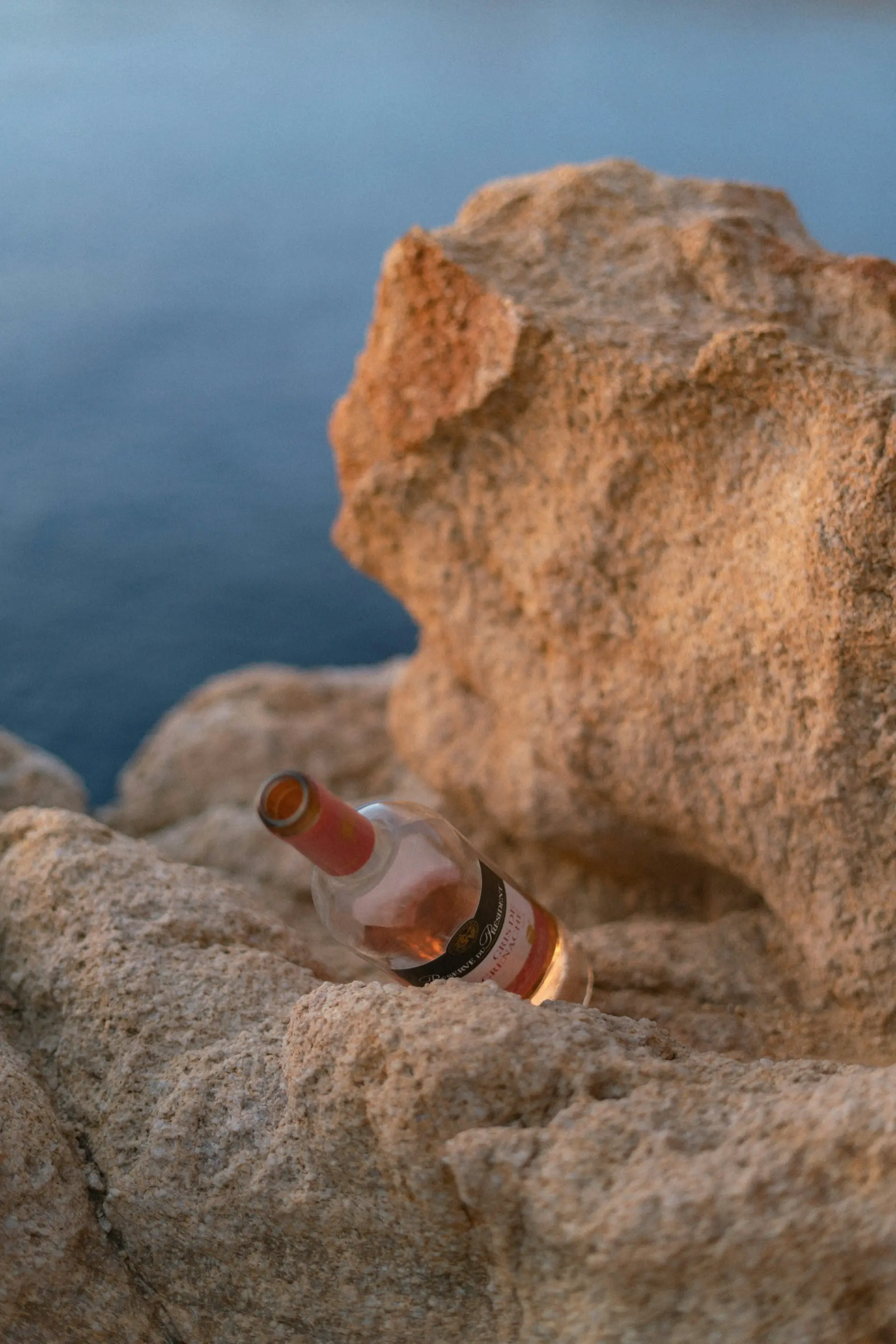
The Figari appellation, the most southerly on the island, enjoys ideal climatic conditions. The reds, based on niellucciu and sciaccarellu, offer silky tannins and aromas of red fruits, garrigue and gentle spices. The rosés are pale, lively and delicately fruity, perfect for summer lunches facing the sea. The vermentinu whites seduce with their mineral freshness and citrus notes.
The Porto-Vecchio appellation, more confidential, holds fine surprises. The estates cultivated on granitic slopes descending towards the gulf produce elegant wines that faithfully reflect their terroir. Several of these estates offer tastings in their cellars, providing an ideal pause between beach and maquis.
Tasting on the spot: markets and producers
The Porto-Vecchio market, held several times a week on the Place de la République, is the unmissable meeting point for food lovers. Beneath century-old plane trees, the producers' stalls overflow with charcuterie, cheeses, and sun-gorged fruits and vegetables. The atmosphere is convivial, the tastings generous, the conversations sincere.
Beyond the market, several producers open their doors to visitors. The porc nustrale farmers of the upper Sartenais welcome those who want to understand how an exceptional prisuttu is born. The shepherds of the Coscione plateau demonstrate brocciu-making in ancestral sheepfolds. The maquis beekeepers explain the honey cycle and offer guided tastings.
For those who prefer to be guided, our concierge service organises bespoke gastronomic circuits. A morning with a charcuterie producer, lunch at a farm inn, a tasting at a wine estate: each day can become a journey to the heart of Corsican flavours.
In the evening, back at Villa Azaitu, the terrace barbecue invites you to cook the day's market finds. A figatellu grilled over embers, a tomato salad with fresh brocciu, a glass of Figari rosé: Corsican gastronomy is also lived in the simplicity of a shared meal beneath the stars, with the song of cicadas as sole accompaniment and the Mediterranean shimmering below.
Keen to discover Corsican gastronomy from Villa Azaitu?
Book your stay