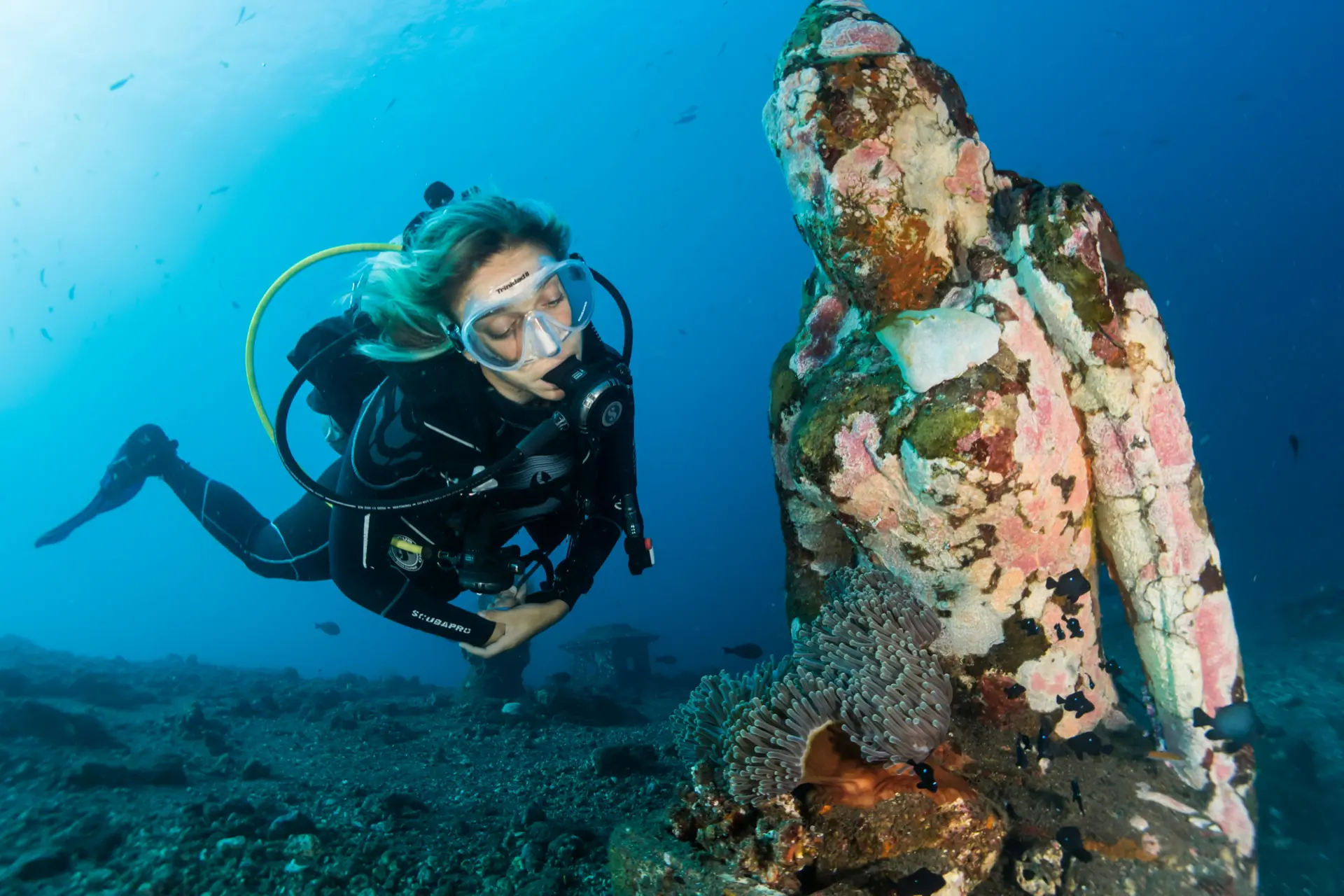
Facing Palombaggia beach, just a few nautical miles from the shore, a cluster of small granite islands rises from the Mediterranean. The Cerbicales Islands. The name alone conjures images of wave-beaten rocks, secret seabeds and nature left to its own devices. For divers and snorkelling enthusiasts, this tiny archipelago is one of the finest underwater playgrounds in all of Corsica. The waters that surround it are strikingly clear, the seabed teems with life, and the nature reserve that has protected these islets since 1981 has allowed marine fauna to flourish with an abundance found only in the most pristine corners of the Mediterranean.
From Villa Azaitu, perched on the heights above Palombaggia, the Cerbicales are that familiar silhouette glimpsed each morning from the terrace, resting on the horizon like an invitation. To dive there is to step through the looking glass, to cross to the other side of the scenery and discover an underwater world of extraordinary richness. This guide tells you everything you need to know to make the most of it, whether you favour a simple mask and snorkel or hold a certified diving qualification.
The Cerbicales nature reserve
The Cerbicales Islands form a chain of five uninhabited islets: Pietricaggiosa, the largest, followed by Forana, Maestro Maria, Piana and the Toro rock. Classified as a nature reserve in 1981, the archipelago benefits from strict protection that forbids landing on most islets and severely regulates fishing in the surrounding waters. This protection has borne spectacular fruit.
Over four decades, marine life has regenerated with remarkable vigour. The posidonia meadows, those underwater prairies that serve as the lungs of the Mediterranean, stretch here over hectares, providing shelter and sustenance to hundreds of species. Dusky groupers, once decimated by spearfishing, have returned in numbers. You now encounter them regularly, sometimes just a few metres from the diver, impressive in size and possessed of a calm curiosity that fascinates.
The reserve also hosts one of the last colonies of Cory's shearwaters in Corsica, along with European shags and Audouin's gulls, species that are rare in the Mediterranean. Above the water as below, the Cerbicales are a sanctuary of biodiversity that alone justifies a journey to southern Corsica.
Snorkelling from the beach
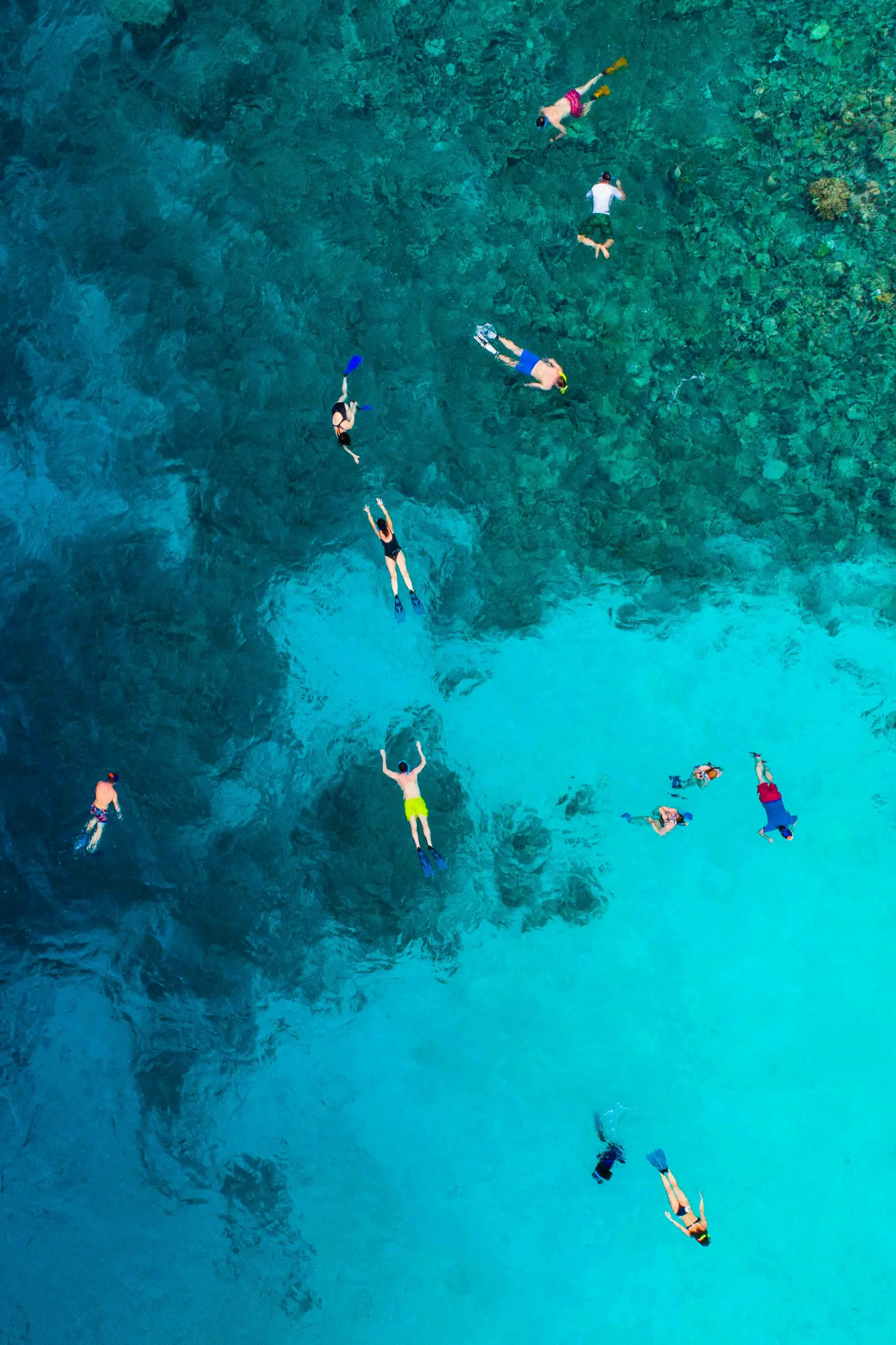
You do not need a diving certificate to discover the underwater riches of the Cerbicales. Snorkelling offers an accessible entry point for everyone, including children. And there is no shortage of spots along the Palombaggia coastline.
The coves situated south of the main Palombaggia beach are the most rewarding. Where the red porphyry rocks plunge into turquoise water, the seabed is absolutely clear. Within the first few metres, you spot shoals of white-headed sea bream, colourful ornate wrasse zigzagging between rocks, violet sea urchins clinging to the walls and, in the crevices, octopuses whose curious eyes you notice first. The posidonia sways gently in the current, and among its fronds hide seahorses, pipefish and nudibranchs of surprising colours.
The water temperature ranges from 22 to 26 degrees Celsius from June to September, making the experience pleasant even without a wetsuit. Choose the morning hours if you can, between seven and ten o'clock. The sea is then perfectly calm, visibility often reaches twenty metres, and you will have the seabed to yourself. A mask, a snorkel, a pair of short fins: that is all you need for an unforgettable experience five minutes on foot from the villa.
Scuba diving: the best spots
For certified divers, the waters around the Cerbicales offer sites of exceptional quality. Local dive centres know every rock, every fissure, every passage, and adapt outings to ability levels and weather conditions.
The Merou site, located north of Pietricaggiosa, is arguably the most iconic. As its name suggests, you regularly encounter sizeable dusky groupers here, sometimes in groups of three or four, settled in cavities between granite blocks. The dive unfolds between 15 and 30 metres depth, along a wall covered in red and yellow sea fans that sway in the current. Mediterranean barracuda, long and silvery, patrol in tight shoals above the drop-off, creating a striking spectacle when they turn in unison.
The Sec de la Vache, an underwater mount whose summit rises to just eight metres below the surface, is another remarkable site. The rock is covered in a mosaic of colours: orange sponges, pink anthias, red coral in the darkest overhangs. Moray eels peer out from their holes, scorpionfish merge with the scenery, and dentex, those swift and elegant predators, cross the scene in a flash. For advanced divers, the southern wall descends beyond 40 metres into a deep blue where eagle rays are sometimes spotted and, more rarely, loggerhead turtles in transit.
Marine wildlife: a permanent spectacle
What strikes you first when diving at the Cerbicales is the sheer abundance. The Mediterranean is often described as a sea impoverished by overfishing and pollution. Here, within the protected perimeter of the reserve, the opposite is true. Life abounds, everywhere, at every depth.
Dusky groupers are the undisputed stars. Some specimens reach one metre twenty in length and weigh over forty kilos. They approach the diver with quiet confidence, accustomed to human presence but never tame. Their gaze, deep and faintly melancholic, is one of the highlights of any dive in these waters. Mediterranean barracuda, smaller than their tropical cousins but every bit as photogenic, form compact shoals that turn slowly around the diver like a silver carousel.
In the posidonia meadows, the spectacle is more discreet but equally rich. Wrasses, combers and sea bass share this vegetable labyrinth. Noble pen shells, those emblematic large shellfish of the Mediterranean, raise their dark shells in the underwater prairies. And for the most patient observers, short-snouted seahorses reveal themselves, clinging to a posidonia frond, tiny and perfectly camouflaged.

Dive clubs and centres
Several dive centres operate in the Porto-Vecchio and Palombaggia area, offering daily outings to the Cerbicales from May to October. All are affiliated with FFESSM or PADI and equipped with recent, well-maintained gear.
Clubs based at the Porto-Vecchio marina depart morning and afternoon for dives lasting forty to sixty minutes depending on the site. The boat trip to the Cerbicales takes around twenty minutes, a crossing that is already magnificent and allows you to admire the Palombaggia coastline from the open sea. Discovery dives are available from age eight in ideal conditions: calm, warm and crystal-clear water, attentive supervision and rich seabeds from the very first metres.
For experienced divers, Level 2 and 3 courses are also available, along with marine biology workshops that teach you to identify the species you encounter. Some centres also offer night dives, an experience in its own right where the seabed reveals unsuspected activity: hunting octopuses, lobsters emerging from their hiding places, shrimp with luminescent eyes. Book at least a few days in advance during high season, as places on boats are limited.
Practical information: levels, seasons and booking
The diving season at the Cerbicales runs from May to October, with peak conditions between June and September. Water temperature ranges from 18 degrees in May to 26 degrees in August. Underwater visibility is generally excellent, often exceeding 25 metres in June and September, the two months we particularly recommend for Cerbicales diving in Corsica.
For snorkelling, no certification is required. You simply need to be able to swim and have basic equipment. The Palombaggia coves are freely and openly accessible. For scuba diving, a Level 1 certificate (or PADI Open Water) grants access to the majority of sites. Prices range from 55 to 75 euros for a guided dive, equipment included. Discovery dives cost around 80 euros and last half a day.
From Villa Azaitu, the Porto-Vecchio dive centres are twenty minutes by car. Some even offer a meeting point directly on Palombaggia beach during high season. We recommend our guests book at least three days ahead in July and August. In June and September, booking the day before is generally sufficient. And whatever your level, wonder is guaranteed: the waters of the Cerbicales are among those rare places in the Mediterranean where the sea still feels intact, alive and generous.
Fancy diving into the crystal-clear waters of the Cerbicales from Villa Azaitu?
Book your stay